Cannabis Edibles and Heart Health: What Research Actually Shows
Cannabis can briefly raise heart rate and blood pressure, but does that hold for edibles? Here is what four studies show, what is still unknown, and what to bring to a doctor before you use them.
Cannabis, including edibles, can make your heart beat faster and raise your blood pressure for a short time after you use it. A review pooling 20 observational studies did not find a statistically significant link between cannabis use and heart attack or stroke.
The real question, if you use edibles specifically, is whether those same findings apply to what you eat rather than what you smoke.
This article speaks to adults 21 and older who already use, or are considering, cannabis edibles. It is not medical advice.
How the Cardiovascular Research on Cannabis Edibles Compares, Study by Study
Four publications help answer this question: one review and three studies, two of which both measured heart rate. Comparing them side by side shows where the edibles-specific findings stand apart from research on cannabis use in general, including smoked cannabis.
- Publication status
- Peer-reviewed
- Population
- 20 observational studies
- Consumption route
- General cannabis use; route not specified
- Outcome measured
- Heart attack and stroke
- Finding
- No statistically significant link
- Limitation
- Authors caution about differences between the studies
- Publication status
- Preprint, not yet peer reviewed
- Population
- 59 adults
- Consumption route
- Store-bought edible, at least 5 mg THC
- Outcome measured
- Heart rate
- Finding
- Small, not clinically meaningful decrease in heart rate
- Limitation
- Preliminary; not yet peer reviewed
- Publication status
- Peer-reviewed, published May 28, 2025
- Population
- 20 smokers, 9 edible users, 26 nonusers
- Consumption route
- Compared smoked cannabis and THC edibles
- Outcome measured
- Blood vessel dilation
- Finding
- Both groups showed impaired blood vessel dilation
- Limitation
- Small study; measured a vascular marker, not heart attacks
- Publication status
- Peer-reviewed, published 2020
- Population
- 17 healthy adults who rarely use cannabis
- Consumption route
- Brownies with placebo or THC doses
- Outcome measured
- Heart rate
- Finding
- 10 mg THC dose raised heart rate
- Limitation
- Does not show long-term heart risk or a safe dose
The 59-person edibles study above is a preprint on PubMed Central, which means it has not yet been peer reviewed by a journal. Treat its small heart-rate finding as preliminary. It is not a basis for a safe dose or a product claim.
Do Edibles Raise Heart Rate and Blood Pressure Right After Use?
THC and CBD are cannabinoids, the chemical compounds in cannabis responsible for its effects. THC is the compound mainly responsible for cannabis's mind-altering effects; CBD does not produce that effect. Cannabis use can raise heart rate and lower blood pressure, effects that can be risky for people with existing heart conditions. A newer study looked at this effect after people ate a cannabis edible instead of smoking.
The preliminary study followed 59 adults who ate a store-bought cannabis edible with at least 5 milligrams of THC. Researchers measured heart rate after they ate it. Their heart rate showed only a small drop, a change the researchers call statistically significant but not clinically meaningful. This study is a preprint, so it has not yet been peer reviewed and its findings are preliminary.
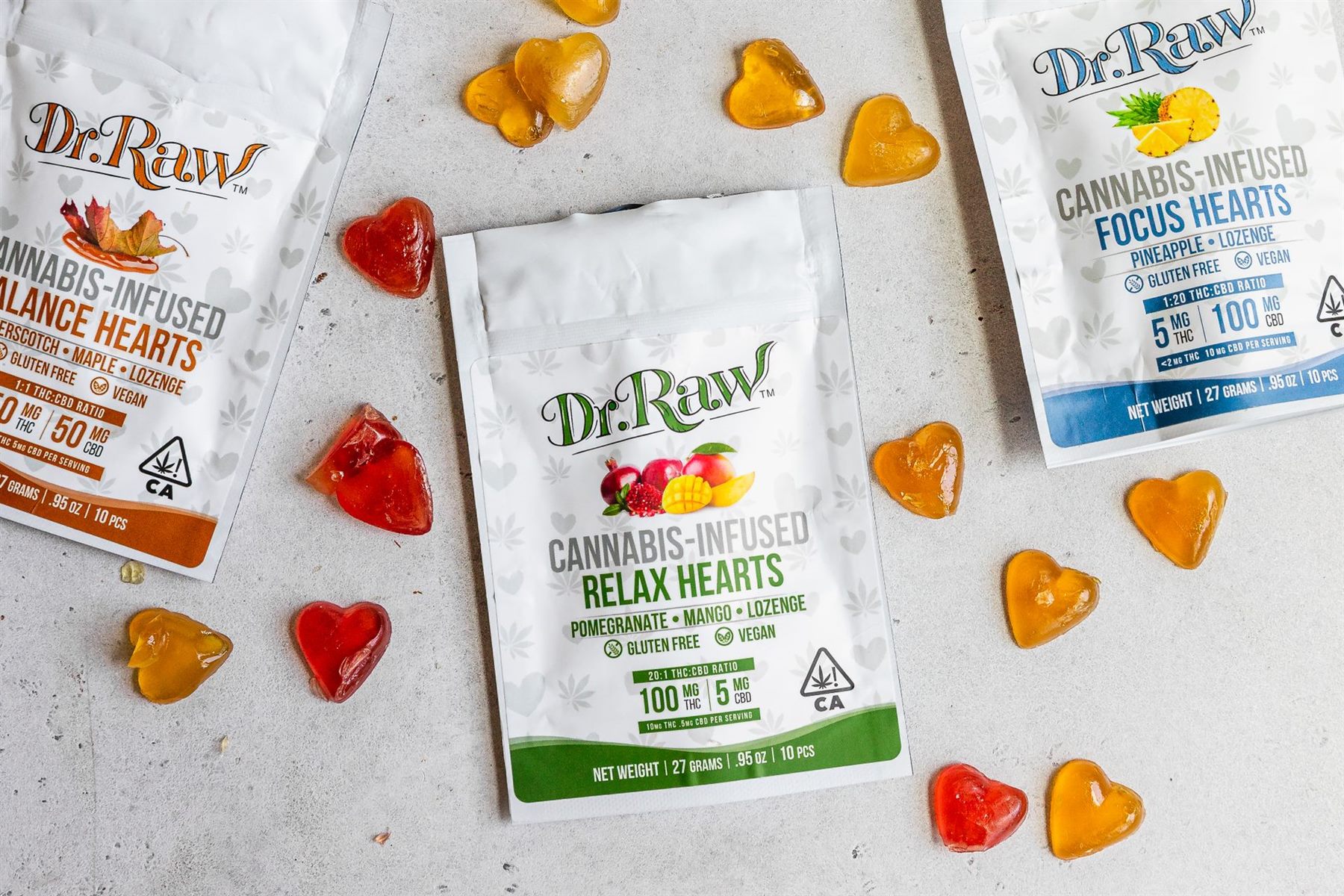
A separate controlled brownie dosing study gave brownies with different THC doses to 17 healthy adults who rarely used cannabis. Compared with a placebo brownie, the 10 milligram THC dose raised heart rate. This shows the effect can happen without smoking. This 2020 study does not show long-term heart disease risk or a safe dose for someone with a heart condition.
Is There a Link Between Cannabis Edibles and Heart Attack or Stroke?
A pooled analysis of 20 observational studies did not find a statistically significant association between cannabis use and acute heart attack or stroke. The review's own authors caution that differences between the studies mean these findings should be read with caution, not treated as a final answer.
This pooled analysis covers cannabis use broadly, not a dataset limited to edibles alone.
Can Edibles Cause a Heart Rhythm Problem Like Atrial Fibrillation?
The evidence reviewed here does not include a study that looked specifically at cannabis edibles and atrial fibrillation, an irregular heartbeat that is often, but not always, fast, or other heart rhythm problems.
Researchers studying cannabis more broadly point to two possible mechanisms: platelet aggregation and vasospasm, which a later section explains in plain words.
Why Edibles and Smoked Cannabis Don't Always Show the Same Heart Effects
As the edibles-specific study above found, heart rate dropped only slightly after people ate a cannabis edible instead of smoking. That finding is still preliminary, since the study is a preprint.
A separate study compared blood vessel function in long-term cannabis smokers and people who use THC edibles. Researchers found impaired blood vessel dilation in both groups, similar to a problem seen in tobacco smokers; laboratory findings suggested the underlying mechanisms may differ between the two groups. This study measured a vascular marker, not actual heart attacks, so it can't compare edible and smoking risk directly.
Official guidance separates smoke-related blood vessel damage from other short-term effects, including a rise in heart rate. That guidance says a faster heart rate can be risky for people with heart conditions and may raise heart attack risk. Separate guidance notes that edible effects can take time to appear, and that delay can lead someone to use more than planned.
What ‘Vasospasm,’ ‘Platelet Aggregation’ and ‘Endothelial Dysfunction’ Mean in Plain Words
Research on cannabis and the heart uses a few technical terms often. Here is what each one means in plain English.
Platelet aggregation
Platelets, a type of blood cell, clump together; increased aggregation means they clump more than normal. Researchers studying cardiovascular events have found that THC acts as a clot-promoting substance by causing this increased platelet clumping.
Vasospasm
A blood vessel suddenly tightens or narrows. Researchers propose that THC may irritate the inner lining of blood vessels and disrupt the nerves that control them, which could lead to vasospasm.
Endothelial dysfunction
The inner lining of a blood vessel does not relax and widen the way it should. One study found impaired blood-vessel dilation in both long-term cannabis smokers and THC-edible users. Researchers suggest the mechanisms behind this may differ between the two groups.
These terms describe mechanisms researchers propose to help explain their findings. They are not proof that any single product causes harm.
What to Tell a Doctor Before Using Edibles, Especially With Heart Medication

A short checklist can make that conversation easier. Bring these details to a doctor or pharmacist, especially if you take medication for your heart.
Before the appointment
- The product label, including the brand and the specific item
- The amount of THC and CBD listed on that label
- How often you use edibles
- Any symptoms you have noticed since using edibles
- A current list of your medications, including any heart medication
Utah medical cannabis health guidance advises people who use medical cannabis to always tell a medical provider or pharmacist, so that person can check for interactions with other medications. Sharing your medication list and the label details above can help with that check, though the provider may ask for more information.
This checklist is meant to support a conversation with a doctor, not replace one. Reading a label cannot tell you, on its own, whether edibles are safe for your heart.
What a Cautious Reader Can Do Next: Know What's in the Product
None of this research tells a reader whether one specific edible is safe for their heart; a more useful step is checking the product label before buying. Check the label and menu listing for the product's THC and CBD amounts instead of guessing from the packaging.
A licensed California cannabis delivery service operates under state Department of Cannabis Control rules. Its menu lists edibles alongside flower, vapes, pre-rolls, cannabis-infused drinks and wellness products.
Adults 21 and older can browse the menu without a medical card. The Cannabashery full products page lists flower, edibles and vapes together, making it simple to find a specific item's listing.
Checking a label is a practical step, not a claim that any product is safe or risky for the heart. It only shows what is in a product; it does not replace a conversation with a doctor about heart health.
Your Next Step With The Cannabashery
The Cannabashery delivers cannabis the same day across San Pedro and the South Bay. It's a family-owned business, and its About Cannabashery page describes its roots among San Pedro locals.
Shop Now to browse the menu and check each label's details before you order.